CATEGORY - PAYMENTS
What is Bulk Payments and How They Differ from Bulk Lists
Payments - 20 May, 2025
-
Table of Contents
Managing Multiple Payments Just Got Easier
Handling payments for hundreds of vendors, employees, or service partners at once? It’s no easy job—and one small mistake can cost your business time, trust, and money. Whether it’s salaries, vendor payments, incentives, or commissions, timely and error-free payouts are non-negotiable.
While individual transactions are simple enough, managing large-scale disbursements regularly needs something more reliable. That’s where bulk payments (also known as mass payouts or batch transfers) come into play. This method allows businesses to transfer funds to multiple recipients in one go—securely, accurately, and quickly.
Bulk payments aren’t just a convenience anymore—they’re a necessity for growing businesses that want to streamline operations and improve payment efficiency.
What is a Bulk Payment?
Bulk payment is a digital payment facility that allows businesses or institutions to send money to multiple people or accounts in one go. It’s commonly used for salary disbursements, vendor payments, refunds, or incentives. Instead of transferring money individually, the payer can make a single debit transaction from their account, and the amount is distributed to multiple beneficiaries listed in a bulk file.
For example, a company can credit salaries to all its employees’ bank accounts in one click—saving time, reducing manual effort, and ensuring faster processing.
How Does Bulk Payment Work in India?
Bulk payments are a convenient way for businesses, institutions, and organisations to send money to multiple recipients in one go. Whether it’s for vendor payments, salary disbursements, refunds, or incentives—bulk payment solutions help save time, reduce errors, and ensure smooth fund transfers.
In India, bulk payments are carried out through various digital channels such as:
Step-by-Step Process of Bulk Payments
-
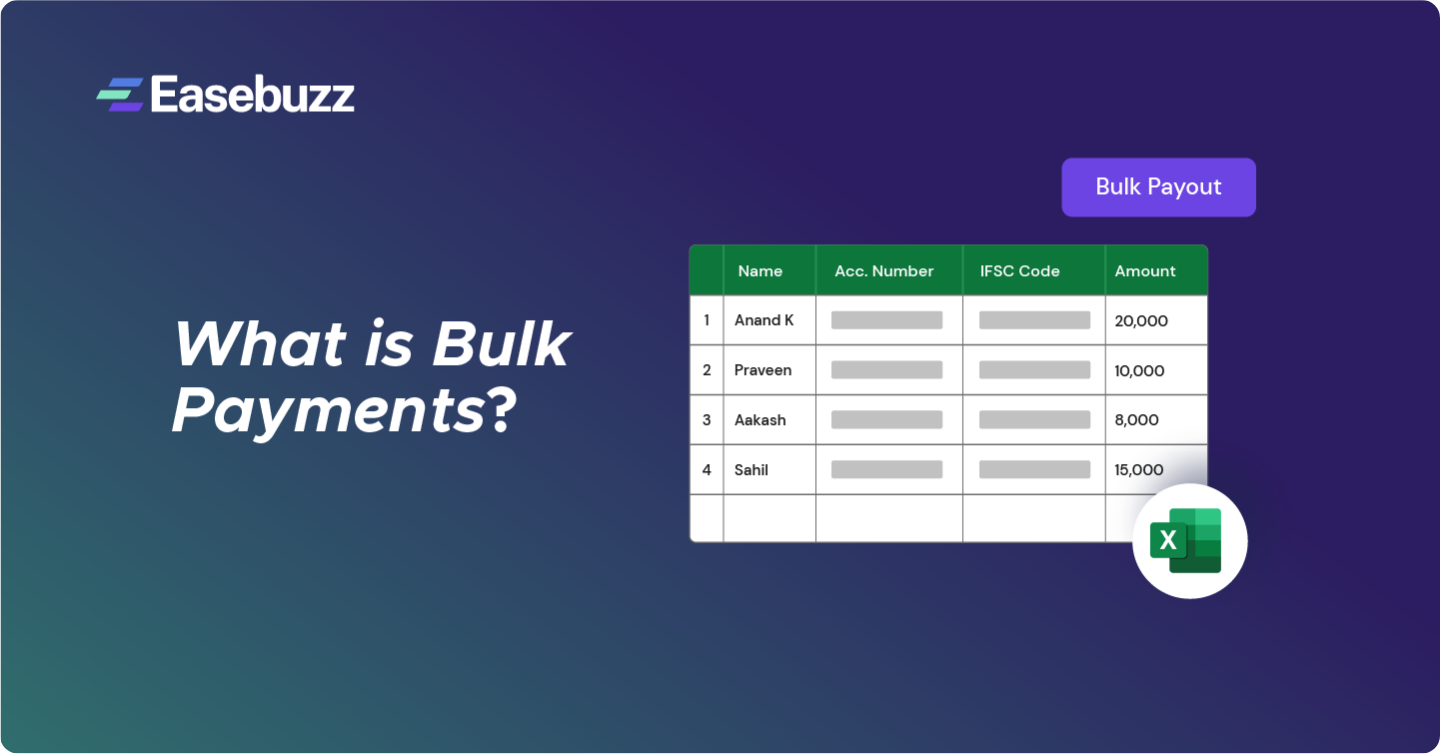
Create a bulk list: The business (payer) prepares a file containing the account details of all recipients, including names, bank account numbers, IFSC codes, and the payable amounts.
-
Upload the list: This file is uploaded on the bank’s corporate portal, a payment gateway, or a dedicated bulk payment solution.
-
Review and approve: The system checks for errors and verifies all the details. Once the business confirms the information, it approves the bulk transaction.
-
Payment processing: The system processes all payments together, deducting the total amount from the payer’s account and transferring the respective amounts to each recipient’s bank account. This is recorded as a single debit entry in the payer’s account.
Common Ways to Execute Bulk Payments
-
Bank Portals: Most Indian banks offer bulk payment facilities through their corporate banking platforms, where businesses can upload payment files for NEFT, RTGS, or IMPS transfers.
-
Payment Gateways: Many modern payment gateways provide APIs and dashboards that support bulk payouts, making them ideal for e-commerce companies, startups, and service providers.
-
Payroll and Accounting Systems: Payroll software often comes with integrated bulk payment features, which help HR and finance teams to automate monthly salary payouts and statutory payments like EPF and ESI.
Example of Bulk Payments
Bulk payment solutions have become an essential tool for businesses today, especially in a fast-paced, digital-first economy. Here are some practical and widely used examples of how companies in India are making the most of bulk payment systems:
-
Salary Payouts Made Easy: Organisations, whether large corporates or growing startups, use bulk payment systems to transfer salaries directly to employees’ bank accounts—monthly, fortnightly, or even weekly. This not only saves time but also reduces manual errors and ensures employees are paid on time.
-
Smooth Vendor and Supplier Settlements: Businesses often deal with multiple vendors, service providers, and partners. With bulk payments, they can clear dues in one go—ensuring faster settlements, better vendor relationships, and hassle-free reconciliation.
Popular Types of Bulk Payments in India
Managing multiple payments is now easier than ever for businesses. Here are the common ways to handle bulk payouts:
-
Bank Transfers: Companies can use their bank’s online portal or submit wire transfer requests to make multiple payments at once. This method works well for domestic payments and is still widely used.
-
Electronic Fund Transfers (EFT): NEFT, RTGS, and IMPS are the go-to digital payment modes in India. These systems allow fast, secure transfers directly from one bank account to another — perfect for handling bulk payouts to employees or partners.
-
Payroll Systems: Automated payroll software helps businesses pay salaries to many employees in one go. These systems are integrated with bulk payment features, ensuring timely and error-free salary disbursal.
-
Vendor and Supplier Payments: Bulk payment tools allow businesses to settle multiple invoices in a single transaction. This saves time, reduces manual effort, and helps maintain clear financial records.
Bulk payment solutions make business operations smoother, faster, and more efficient — a must-have in today’s digital-first economy.
Difference Between: Bulk List vs. Bulk Payment?
A bulk list, also known as a beneficiary list, is a ready file that includes the names, bank details, and payment amounts of multiple recipients. It acts as a base for processing bulk transactions in one go.
On the other hand, a bulk payment refers to the actual transfer of funds to all recipients as per the bulk list. Think of the bulk list as the plan, and the bulk payment as the execution.
Types of Bulk Payments in India
-
Immediate Bulk Payment (IBULK): Payments are processed instantly—ideal for urgent payouts.
-
Next-Day Bulk Payment (NBULK): Funds are credited the next working day—great for routine payments.
-
Future-Dated Bulk Payment (FBULK): Schedule your payments in advance and manage cash flow smoothly.
-
Bulk Inter Account Transfer (IAT): IAT allows fund transfers between accounts within the same bank. It’s commonly used for:
-

Moving funds between a business’s accounts
-
Paying employees who bank with the same provider
-
Managing internal accounting transfers
-
Bulk solutions help businesses save time, reduce errors, and simplify large-scale transactions.
Benefits of a Bulk Payment
Bulk payments allow businesses to transfer funds to multiple recipients in one go—be it salaries, vendor payments, or reimbursements. Here’s why they’re a smart choice:
-
Faster Processing: No more handling one transaction at a time. With bulk payments, businesses can process hundreds of payments instantly—ideal for monthly payrolls or mass payouts.
-
Cost Savings: Bundling payments reduces banking charges and administrative overheads. This means fewer transaction fees and more savings for high-volume businesses.
-
Better Cash Flow Control: Scheduling bulk payouts in sync with your income helps maintain a steady cash flow. It brings more clarity and control to financial planning.
-
Secure & Compliant: Modern bulk payment platforms come with encryption, OTP-based authentication, and secure payment gateway—ensuring your data stays protected.
-
Simplified Management: All payments in one dashboard make tracking, reporting, and reconciling easier. It reduces errors and helps you make smarter financial decisions.
Whether you’re a startup or a large enterprise, bulk payments can streamline your operations and help you scale with ease.
Risks and Challenges in Bulk Payments: What Every Business Should Know
Bulk payments offer speed and efficiency, but they also come with a few challenges that businesses must be prepared to handle. Here’s a look at some common risks and how to overcome them:
-
Risk of Errors: One small mistake in beneficiary details—such as an incorrect account number or IFSC code—can result in failed or misdirected payments. Always verify payment data thoroughly before processing bulk transfers.
-
Fraud and Data Breaches: With large volumes of sensitive financial data being processed, bulk payment systems are often targeted by fraudsters. Using a trusted, secure payment platform with multi-layered security can protect your business from potential breaches.
-
Technical Failures and Downtime: Unexpected technical glitches or downtime in the system can delay payouts, impacting operations and vendor relationships. It’s wise to have backup systems and support in place to ensure continuity during such issues.
Smart Tips for Smooth Bulk Payment Implementation
Getting started with a bulk payment system may seem overwhelming, but with the right approach, businesses can make the transition seamless and secure:
-
Do Your Homework: Before choosing a bulk payment solution, research well. Check for compatibility with your current accounting tools, security standards, ease of integration, and responsiveness of the support team.
-
Create a Clear Plan: Build a detailed rollout plan—list key milestones, assign roles to team members, and define timelines. A step-by-step approach helps in reducing errors during setup.
-
Focus on Security First: Ensure the platform uses robust encryption and adheres to RBI-compliant protocols. Regular audits and security updates will keep your data safe from cyber threats.
-
Train Your Staff: A well-trained team is key to efficient operations. Conduct hands-on training for employees who will handle uploads, validations, and reconciliations to ensure they’re confident with the system.
-
Set Up Error-Handling Protocols: Mistakes can happen. Set up a clear process for resolving failed payments—include verification steps, refund policies, and customer communication guidelines.
-
Keep Monitoring: Monitor your system’s performance regularly. Track metrics like error rates, turnaround time, and user feedback. Continuous monitoring will help in timely improvements.
Conclusion
Businesses are increasingly relying on bulk payments to simplify transactions and reduce manual work. While the benefits are many—like cost savings, speed, and scalability—proper planning, robust security, and ongoing monitoring are essential for success. Adopting these best practices ensures that your bulk payment process runs smoothly, securely, and efficiently—empowering your business in today’s digital-first economy.
FAQ's
What is the difference between bulk and batch payments?
Bulk payments are processed simultaneously, while batch payments are grouped but may not occur at the same time.
What is a bulk faster payment?
A bulk faster payment uses the Faster Payments network, enabling instant transfers between bank accounts, with funds reaching recipients in minutes.
How do I make bulk payments via UPI?
To make bulk payments through UPI, upload a list of beneficiary UPI IDs and amounts to a system that supports UPI transactions, then initiate the transfer for quick processing.
What is a bulk fund transfer?
A bulk fund transfer moves funds from one account to multiple recipients, using methods like bank transfers, EFT, or payment gateways, streamlining payment processes.
Share: