CATEGORY - PAYMENTS
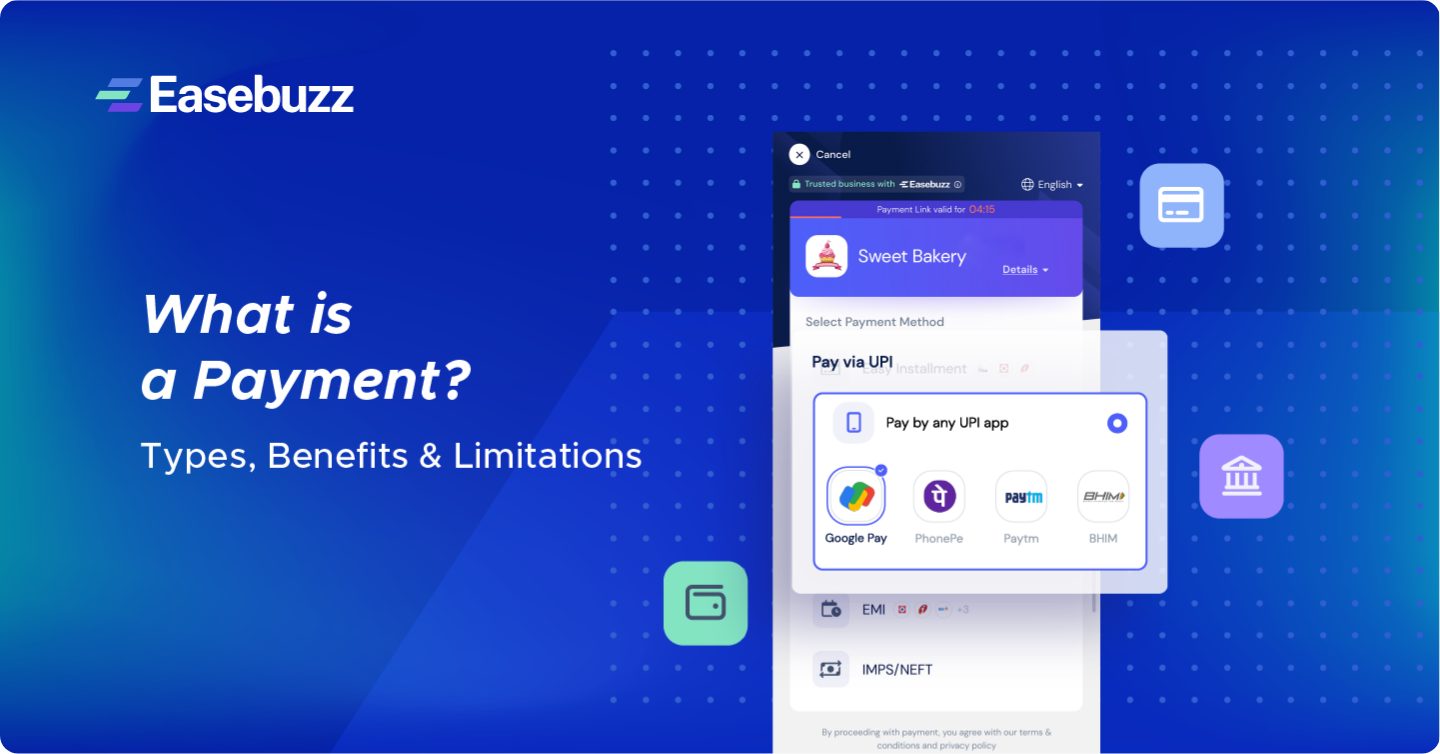
What is a Payment? Types, Benefits & Limitations
Payments - 11 June, 2025
-
Table of Contents
What Is a Payment?
A payment is the transfer of monetary value from one party (the payer) to another (the payee) in exchange for goods, services, or to fulfill a legal obligation. Payments can be made using various methods, including cash, cheques, electronic transfers, credit/debit cards, and digital currencies. They can occur before, during, or after the delivery of goods or services, depending on the agreed terms between the involved parties.
Evolution of Payment Methods
The concept of payment has evolved significantly over time:
-

Barter System: The earliest form of payment, where goods and services were exchanged directly without a standardized medium.
-
Commodity Money: Items like gold, silver, or cowrie shells that held intrinsic value were used as a medium of exchange.
-
Coinage and Paper Money: Governments began issuing standardized coins and later paper money, simplifying transactions.
-
Banking Systems: The introduction of banks facilitated the use of cheques, promissory notes, and electronic transfers.
-
Digital Payments: The rise of the internet and mobile technology has led to digital wallets, online banking, and cryptocurrencies.
Types of Payment Methods
-
Cash
-
Pros: Immediate settlement, widely accepted, no transaction fees.
-
Cons: Risk of theft or loss, no transaction record, not suitable for large amounts.
-
-
Cheques
-
Pros: Useful for large payments, provides a paper trail.
-
Cons: Processing delays, risk of bouncing, declining acceptance.
-
-
Credit Cards
-
Pros: Convenient, builds credit history, offers rewards and fraud protection.
-
Cons: High-interest rates if not paid in full, potential for debt accumulation.
-
-
Debit Cards
-
Pros: Directly linked to bank accounts, prevents overspending, widely accepted.
-
Cons: Less fraud protection compared to credit cards, potential overdraft fees.
-
-
Electronic Funds Transfers (EFTs)
-
Pros: Efficient for recurring payments, reduces paper usage, secure.
-
Cons: May take several days to process, potential for errors.
-
-
Mobile Payments
-
Pros: Convenient, fast, often includes security features like biometrics.
-
Cons: Dependent on technology and internet access, security concerns.
-
-
Cryptocurrencies
-
Pros: Decentralized, potential for lower transaction fees, borderless transactions.
-
Cons: High volatility, regulatory uncertainty, limited acceptance.
-
Payment Systems and Infrastructure
Modern payment systems are complex networks that facilitate the transfer of funds between parties. Key components include:
-
Payment Gateways: Authorize and process online payments.
-
Point of Sale (POS) Systems: Hardware and software used by merchants to process transactions.
-
Automated Clearing Houses (ACH): Batch-processing systems for electronic payments.
-
Real-Time Gross Settlement (RTGS): Systems that process high-value transactions individually in real-time.
-
Payment Processors: Companies that handle transaction processing between merchants and financial institutions.
Payment Terms and Agreements
Payment terms define the conditions under which payments are made. Common terms include:
-
Net 30/60/90: Payment is due within 30, 60, or 90 days after the invoice date.
-
Cash on Delivery (COD): Payment is made at the time of delivery.
-
Advance Payment: Full or partial payment is made before goods or services are delivered.
-
Installment Payments: Payments are made in parts over a specified period.
Clear payment terms help in managing cash flow and establishing trust between parties.
Security and Fraud Prevention
As payment methods have evolved, so have the methods of fraud. To mitigate risks:
-
Encryption: Protects data during transmission.
-
Two-Factor Authentication (2FA): Adds an extra layer of security.
-
Tokenization: Replaces sensitive data with unique identification symbols.
-
Regular Monitoring: Keeping an eye on account activity to detect unauthorized transactions.
The Future of Payments
The payment landscape is continually evolving, with trends such as:
-
Contactless Payments: Using NFC technology for quick transactions.
-
Biometric Authentication: Using fingerprints or facial recognition for security.
-
Central Bank Digital Currencies (CBDCs): Digital forms of fiat currencies issued by central banks.
-
Integration with IoT Devices: Enabling payments through smart devices like watches or home assistants.
Conclusion
Understanding the various aspects of payments—from methods and systems to security and future trends—is crucial in today’s digital economy. As technology advances, staying informed about payment innovations will help individuals and businesses make secure and efficient transactions.
FAQ's
What is a Payment?
Payment refers to the transfer of money or something of value from one party to another to complete a transaction. It can be made using cash, digital wallets, debit/credit cards, or through online payment platforms.
What Does “Payment” Mean?
The meaning of payment is the act of fulfilling a financial obligation or settling a debt. It ensures that goods or services received are compensated appropriately.
What is Balance of Payment?
The Balance of Payment (BoP) is a financial statement that records all economic transactions between a country and the rest of the world over a specific period. It includes exports, imports, capital flows, and foreign aid.
How to Pronounce “Payment”?
“Payment” is pronounced as: /ˈpeɪ.mənt/
Sounds like “pay-ment”, with emphasis on the first syllable.
What is a Down Payment?
A down payment is an upfront partial payment made during a large purchase—such as a house, vehicle, or machinery. The remaining balance is usually paid through installments or loans.
What is a Payment Bank?
A payment bank is a type of financial institution in India regulated by the Reserve Bank of India (RBI). It offers basic services like deposits, UPI transfers, and bill payments but cannot issue credit cards or loans.
Examples: Paytm Payments Bank, Airtel Payments Bank
What Are the Main Types of Payments?
There are two major categories:
Traditional Payments:
-
Cash
-
Debit and credit cards
-
Cheques
Modern Digital Payments:
-
UPI (Unified Payments Interface)
-
Mobile wallets (e.g., PhonePe, Paytm, Google Pay)
-
Online payment gateways
-
Net banking and NEFT/RTGS transfers
-
Cryptocurrency (e.g., Bitcoin)
What is a Bank Payment?
A bank payment involves transferring money between bank accounts electronically. It is widely used for regular expenses like utility bills, rent, and online purchases. Methods include UPI, IMPS, NEFT, and RTGS.
What is the best form of payment?
The best form of payment depends on your specific need:
-
Use cash for small, quick transactions.
-
Choose cards for convenience and rewards.
-
Opt for digital payments for secure and instant transfers. Each method has its own benefits and is suited for different scenarios.
Share:


Related Posts
QR Code Payments: How They Work and Why Everyone’s Using Them
Payments - 3 June, 2025