CATEGORY - SME
Festive Sales in India 2026: 15 Key Things Every Business Should Prepare For
SME - 6 Oct, 2026

-
Table of Contents
For shoppers, festive sales mean discounts, new launches and limited-time offers. For businesses, they mean something much bigger: a surge in traffic, orders, payments, customer queries, fulfillment pressure and operational complexity.
India's 2026 festive shopping season is already taking shape. Amazon has announced that the Great Indian Festival will start on October 8, 2026, while Flipkart's Big Billion Days will begin with early access on October 8. The wider demand cycle will continue through Navratri, Dussehra, Dhanteras, Diwali, Christmas and New Year.
For startups, D2C brands, retailers and small businesses, preparing for festive sales is therefore not simply about offering a bigger discount.
It is about making sure inventory, website performance, AI, marketing, payments, logistics, customer support and cash flow work together when demand peaks.
This guide covers the key 2026 festive sales dates and the practical steps businesses can take to prepare for a smoother, more reliable customer journey.
What Are Festive Sales?
Festive sales are promotional shopping periods built around festivals and major retail events. In India, they typically combine discounts, new product launches, bank and payment offers, marketplace campaigns and increased consumer demand.
Festive shopping is no longer limited to a single Diwali weekend. Demand can begin weeks earlier through marketplace campaigns and regional festivals, build through Dussehra and Dhanteras, peak around Diwali and continue through Christmas and New Year.
That makes festive sales a business-readiness exercise rather than a one-day promotion.
Festive Sales Calendar in India 2026
Exact dates for individual retailer campaigns can change, so businesses should verify campaign-specific dates before publishing offers.
| Event | 2026 date / window | Why businesses should prepare |
|---|---|---|
| Ganesh Chaturthi | September 14 | Early regional demand opportunity |
| Amazon Great Indian Festival | Starts October 8 | Major online shopping event |
| Flipkart Big Billion Days | Early access October 8 | Major marketplace shopping window |
| Navratri | October 11–19 | Demand across fashion, beauty, gifting and home |
| Dussehra | October 20 | Major regional shopping and gifting occasion |
| Karwa Chauth | October 29 | Jewellery, fashion, beauty and gifting demand |
| Dhanteras | November 6 | Major shopping occasion for jewellery, electronics and household purchases |
| Diwali | November 8 | One of India's biggest festive demand periods |
| Bhai Dooj | November 10 | Continued gifting demand |
| Christmas | December 25 | Major year-end shopping opportunity |
| New Year | January 1, 2027 | Gifting and clearance campaigns |
Amazon's Great Indian Festival is scheduled to start on October 8, while Flipkart's Big Billion Days has early access from October 8. Dhanteras falls on November 6, 2026.
The key takeaway
Don't plan your festive sales strategy around Diwali alone.
Marketplace events and regional festivals can bring demand forward. Businesses should therefore be ready before the first major sale begins-not when Diwali is only days away.
Why Festive Sales Matter for Businesses
Festive demand creates a major opportunity, but it also exposes operational weaknesses.
A campaign can generate thousands of visitors, but revenue depends on what happens after those visitors arrive.
Businesses need to prepare for:
-

Higher website and app traffic
-
Faster inventory movement
-
Increased order volumes
-
More payment attempts
-
Higher customer-support demand
-
Logistics and delivery pressure
-
More cancellations and refunds
-
Greater reconciliation workloads
-
Increased working-capital requirements
The objective is not simply to generate traffic.
It is to turn festive traffic into successfully paid, fulfilled and satisfied customers.
10 Things Businesses Should Prepare Before Festive Sales
-
Forecast Demand and Secure Inventory
Start with your previous festive-season data.
Review:
-
Best-selling products
-
Daily and weekly order volumes
-
Average order value
-
Regional demand
-
Products that went out of stock
-
Return and cancellation rates
-
Replenishment times
Then build your inventory plan around expected demand rather than simply applying a percentage increase to last year's sales.
Ask:
Which products will customers want, when will demand peak and how quickly can we replenish them?
Most importantly, don't promote products aggressively without checking whether inventory can support the campaign.
-
-
Don't Let "Out of Stock" Become "Out of Opportunity"
Running out of stock during festive sales is frustrating-but simply hiding the product can also mean losing a potential customer.
When a product is unavailable, consider showing:
-
Notify Me when it returns
-
Similar available products
-
Alternative sizes, colours or models
-
Expected replenishment dates
-
Nearby store availability
-
Waitlists for high-demand products
If a customer cannot buy their first choice, give them a useful next choice.
The goal is to recover the opportunity, not just hide the problem.
-
-
Stress-Test Your Website and Checkout
Festive marketing can create a sudden traffic spike. A website that works perfectly on an ordinary day may struggle when thousands of customers arrive simultaneously.
Before launch, test:
-
Page-load performance
-
Server and database capacity
-
Product search
-
Filters
-
Cart functionality
-
Coupon and offer logic
-
Mobile experience
-
Checkout
-
Third-party integrations
-
Order confirmation
-
Tracking and refund journeys
Don't wait for real customers to discover a bottleneck.
Load-test before the sale.
Also avoid making major changes to critical infrastructure immediately before a peak campaign unless absolutely necessary and thoroughly tested.
-
-
Make Your Festive Website Useful, Not Just Festive
A festive website should do more than add banners and fireworks.
Customers should quickly understand:
-
What is on offer?
-
Which products are available?
-
Which products can arrive before the festival?
-
Which discounts actually apply?
-
What payment options are available?
-
What is the return policy?
-
When will the order arrive?
Create dedicated festive landing pages, gift guides and curated collections.
Your mobile experience deserves particular attention because customers may arrive from social media, messaging apps, search or advertisements.
The ideal journey is:
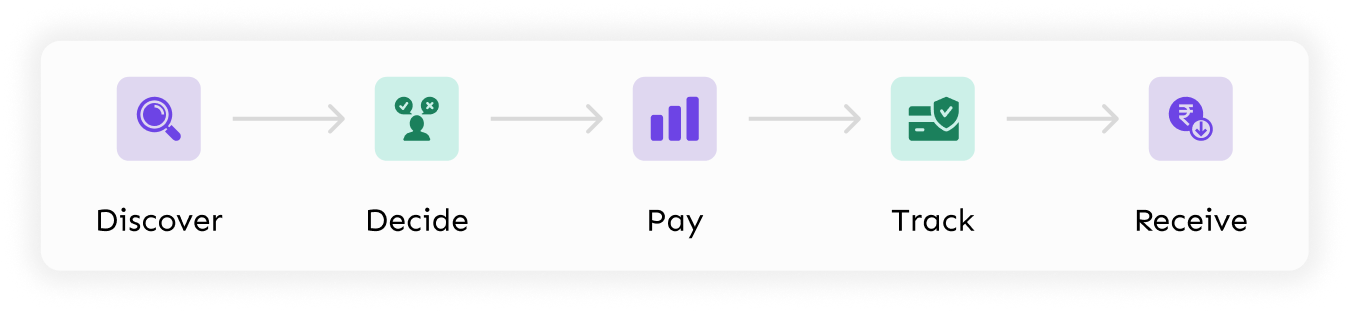
Every unnecessary step creates friction.
-
-
Prepare for AI-Powered and Agentic Shopping
Festive shopping is becoming increasingly AI-assisted. Major commerce platforms are already introducing AI-powered features for product discovery and decision-making, while the broader industry is exploring agentic commerce-where AI systems can increasingly assist with shopping and transactions.
Businesses do not necessarily need to build their own shopping agent.
But they should make their digital commerce infrastructure easy for intelligent systems-and customers-to understand.
Keep these elements accurate and structured:
-
Product names and descriptions
-
Prices
-
Inventory availability
-
Product attributes
-
Delivery information
-
Return policies
-
Offers and eligibility
-
Payment options
AI can also improve the customer journey through:
-
Gift recommendations
-
Product discovery
-
Personalised offers
-
Product comparisons
-
Customer queries
-
Abandoned-cart recovery
-
Delivery questions
-
Return-policy assistance
The objective isn't to add AI everywhere.
Use AI where it removes friction or helps customers make better decisions.
-
-
Build a Payment Failure Recovery Journey
A customer can discover a product, add it to the cart, apply a festive offer and reach checkout-only to lose the sale because the payment fails.
A generic message such as "Payment failed. Please try again." is not enough.
-
Try Again
-
Pay using UPI
-
Use another payment method
-
Try another card or bank
-
Return to checkout
Where appropriate, preserve the cart and offer details so the customer does not have to start again.
Businesses should also monitor whether failures are concentrated around specific payment methods, banks, devices, transaction types or time periods.
A failed payment should trigger recovery-not abandonment.
-
-
Prepare Your Payment Infrastructure for Peak Volumes
Payments sit at the final step between customer intent and completed revenue.
Before festive sales begin, review:
-
Payment modes: Offer payment methods relevant to your customers, including UPI, cards, net banking and EMI options where appropriate.
-
Payment success rate: Monitor successful payments against total attempts and identify recurring failure patterns.
-
Gateway performance: Understand how your payment infrastructure behaves when transaction volumes increase.
-
Payment retries: Make it easy for customers to recover from failed transactions.
-
Settlements: Ensure finance teams have clear visibility into expected and received settlements.
-
Reconciliation: Automate reconciliation where possible to reduce manual work during high-volume periods.
-
Refunds: Define and test refund workflows before the campaign begins.
A payment gateway should be treated as part of the festive conversion infrastructure, not merely a technical integration.
-
-
Plan Logistics Before Customers Place Orders
A festive campaign can generate orders faster than a business can fulfil them.
Review:
-
Warehouse capacity
-
Regional inventory
-
Delivery-partner capacity
-
Dispatch cut-offs
-
Delivery promises
-
Packaging availability
-
Reverse logistics
-
Return processing
-
RTO management
If your website promises delivery by a particular date, your inventory and logistics network must be capable of supporting that promise.
A delayed festive gift is not just a logistics issue.
It becomes a customer-experience issue.
-
-
Keep the Festive Feeling Alive After Checkout
Festive commerce is about more than discounts. Customers are shopping for celebrations, gifting and experiences.
The brand experience can extend across:
-
Gift guides
-
Curated collections
-
Gift wrapping
-
Festival-specific packaging
-
Personalised recommendations
-
Festive order confirmations
-
Delivery updates
-
WhatsApp communication
-
Loyalty rewards
-
Post-purchase thank-you messages
Even transactional communication can feel warmer while remaining useful.
The experience should be festive-but never at the cost of speed and clarity.
-
-
Connect Marketing, Inventory, Payments and Operations
One of the biggest festive mistakes is treating every function separately.
Marketing may promote a product that inventory has already exhausted.
Inventory may show a product as available when the warehouse cannot fulfil it.
The website may accept an order while logistics capacity is already overloaded.
The payment may succeed but the order may later be cancelled.
Before launching your biggest campaign, ask:
-
Marketing: What are we promoting?
-
Inventory: Do we have enough stock?
-
Technology: Can the website handle the expected traffic?
-
Payments: Can customers complete transactions reliably?
-
Logistics: Can we deliver what we promise?
-
Customer Support: Can we handle the expected queries?
-
AI/Data: Can we identify customer intent and demand patterns quickly enough?
A festive campaign should operate as one connected customer journey, not a collection of separate departments.
-
Working Capital, Billing and Reconciliation Matter Too
Higher festive sales do not automatically mean healthier cash flow.
Businesses may have to spend on inventory, advertising, packaging, staffing and logistics before receiving corresponding settlements.
Before the season begins, estimate:
-
Inventory purchases
-
Marketing spend
-
Logistics costs
-
Staffing requirements
-
Settlement cycles
-
Refund requirements
-
Return-related costs
-
Emergency cash requirements
Also review GST mapping, invoice templates, discount calculations, refund treatment, credit-note workflows and accounting integrations.
The objective is to prevent a successful festive campaign from creating a financial or reconciliation headache later.
Build an Omnichannel Festive Experience
A customer might discover a product on Instagram, ask a question on WhatsApp, compare it on a website, visit a physical store and eventually complete the purchase online.
The journey does not always follow one channel.
Businesses should therefore consider connecting:
-
Social media
-
WhatsApp
-
Website and app
-
Physical stores
-
Payment links
-
Online checkout
-
Customer support
-
Order tracking
-
Loyalty programmes
The goal is to allow customers to move between channels without losing context.
What Should Businesses Measure During Festive Sales?
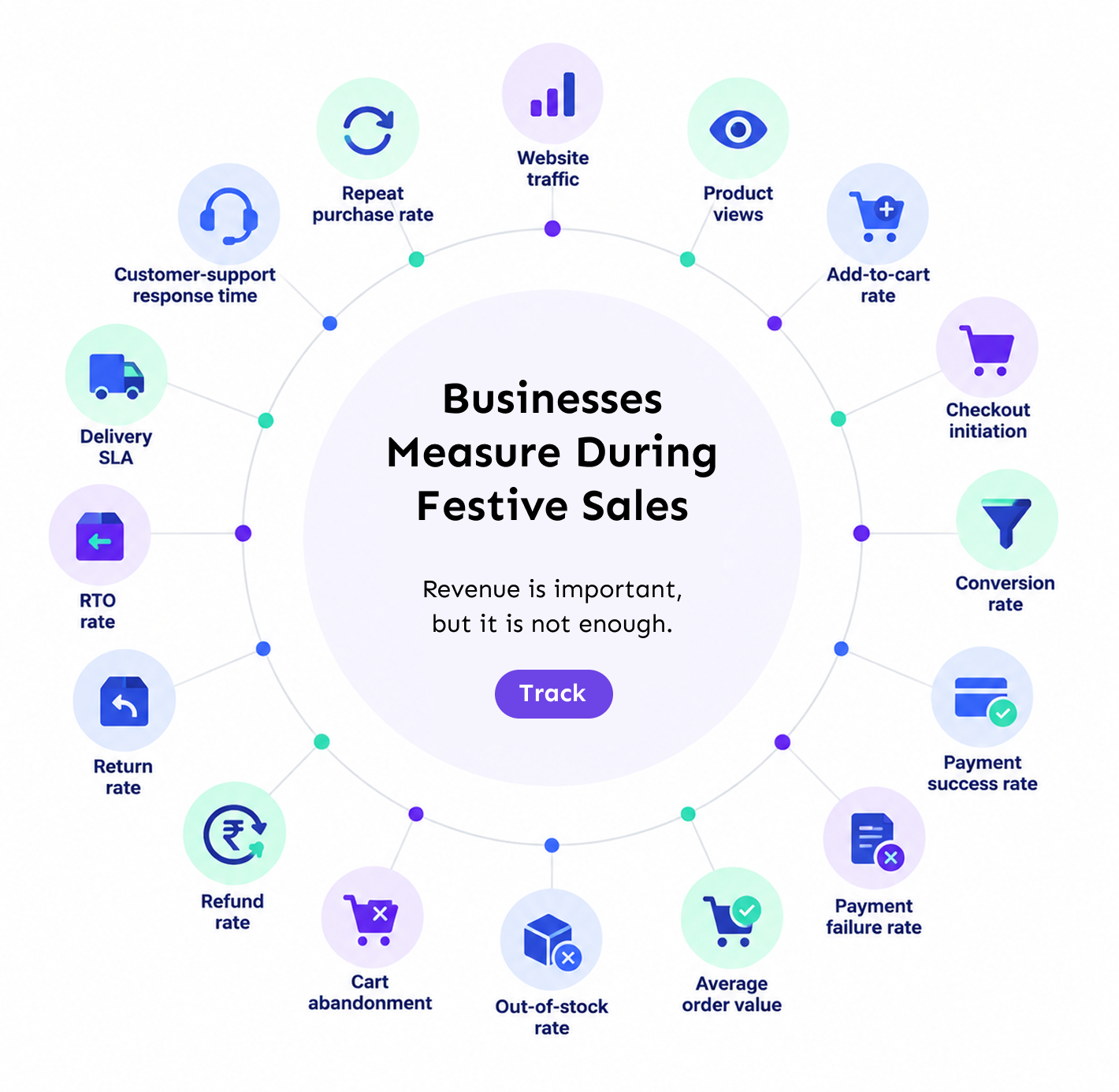
For example, traffic can increase while conversion falls. Sales can rise while payment failures also increase. Orders can grow while returns create margin pressure.
A complete festive dashboard helps businesses identify what is actually happening.
Festive Sales Preparation Checklist
| 7 Days Before | 15–30 Days Before |
|---|---|
| Confirm inventory | Load-test website and app |
| Verify campaign pricing | Test checkout |
| Check payment monitoring | Test payment flows |
| Confirm logistics SLAs | Test refunds and cancellations |
| Publish delivery and return information | Review reconciliation |
| Finalise escalation contacts | Train support teams |
| 30–60 Days Before | 60–90 Days Before |
|---|---|
| Confirm logistics capacity | Review previous festive data |
| Finalise creative assets | Forecast demand |
| Prepare festive landing pages | Plan inventory |
| Review payment methods | Estimate working capital |
| Check GST and invoicing workflows | Finalise campaign strategy |
| Prepare customer-support processes | Review payment infrastructure |
During the Sale
Monitor:
-
Traffic
-
Checkout conversion
-
Payment success
-
Failed transactions
-
Inventory
-
Order volume
-
Refunds
-
Support queues
-
Delivery performance
After the Sale
-
Reconcile payments and settlements
-
Analyse campaign performance
-
Review failed transactions
-
Analyse product performance
-
Measure customer acquisition
-
Launch retention campaigns
-
Document lessons for the next campaign
Conclusion
Festive sales are not simply a discounting exercise.
They are a test of whether your inventory, website, AI, marketing, payments, logistics, customer support and finance operations can work together when demand peaks.
Start preparing before the first major sale.
Forecast demand. Secure inventory. Stress-test your website. Make payment recovery seamless. Prepare for out-of-stock situations. Strengthen logistics. Use AI where it genuinely removes friction. Keep customers informed. And monitor the complete journey from discovery to delivery.
Because when festive traffic arrives, the goal isn't simply to get more people to your website.
The goal is to help more customers discover, decide, pay for and receive what they came to buy-without unnecessary friction.
Ready to prepare your payment infrastructure for the festive season? Explore Easebuzz payment solutions for businesses.
FAQ's
When do festive sales start in India in 2026?
Major festive shopping activity begins before Diwali. Amazon's Great Indian Festival starts October 8, while Flipkart's Big Billion Days has early access from October 8. Businesses should also prepare for regional festivals and campaigns that can generate demand earlier.
How should a small business prepare for festive sales?
Start with demand forecasting, inventory, working capital, marketing, website performance, payments, logistics and customer support. Test these areas before demand peaks rather than trying to fix problems during the sale.
How can businesses reduce payment failures during festive sales?
Review payment success rates, test checkout flows, offer relevant payment methods, create clear retry journeys and monitor failures by payment method, bank and transaction type.
Should businesses change their payment gateway before festive sales?
Avoid major payment infrastructure changes immediately before a peak campaign unless necessary. If changing providers, complete integration, testing, reconciliation and operational validation well before the sale.
Why is payment reconciliation important during festive sales?
Higher transaction volumes across multiple payment methods and channels can make manual reconciliation difficult. Automated reconciliation can help businesses match transactions and settlements and identify discrepancies faster.
Is Diwali the only festive sales opportunity?
No. Businesses can plan around regional festivals, marketplace sales, Dhanteras, Diwali, Bhai Dooj, Christmas and New Year. The right opportunities depend on the category, customer base and geography.
Share: