CATEGORY - PAYMENTS
Safe Digital Payments & Fraud Prevention in India 2026: For Customers, Merchants & Businesses
Payments - 6 Mar, 2026
-
Table of Contents
India is home to one of the world's largest and fastest-growing digital payment ecosystems. With UPI processing over 20 billion transactions every month, along with widespread use of cards, wallets, net banking, and embedded finance, digital payments now power everything from street-side vendors to large enterprises and SaaS platforms. They are no longer just a convenience; they are the backbone of India's modern economy.
However, scale also brings complexity and risk.
Payment fraud in India has evolved far beyond fake SMS links or basic email phishing. Today’s threats are sophisticated and deeply psychological, including so-called “digital arrest” scams, fake police video calls, AI-driven deepfakes, impersonation of senior executives, look-alike domains, redirected payment pages, and remote device takeovers.
As an RBI-authorised Payment System Operator, Easebuzz believes payment security cannot be achieved solely through technology. In India's digital payments ecosystem, trust and resilience are shared responsibilities involving secure platforms, compliant merchants, informed users, and strong regulatory oversight.
What is Payment Security?
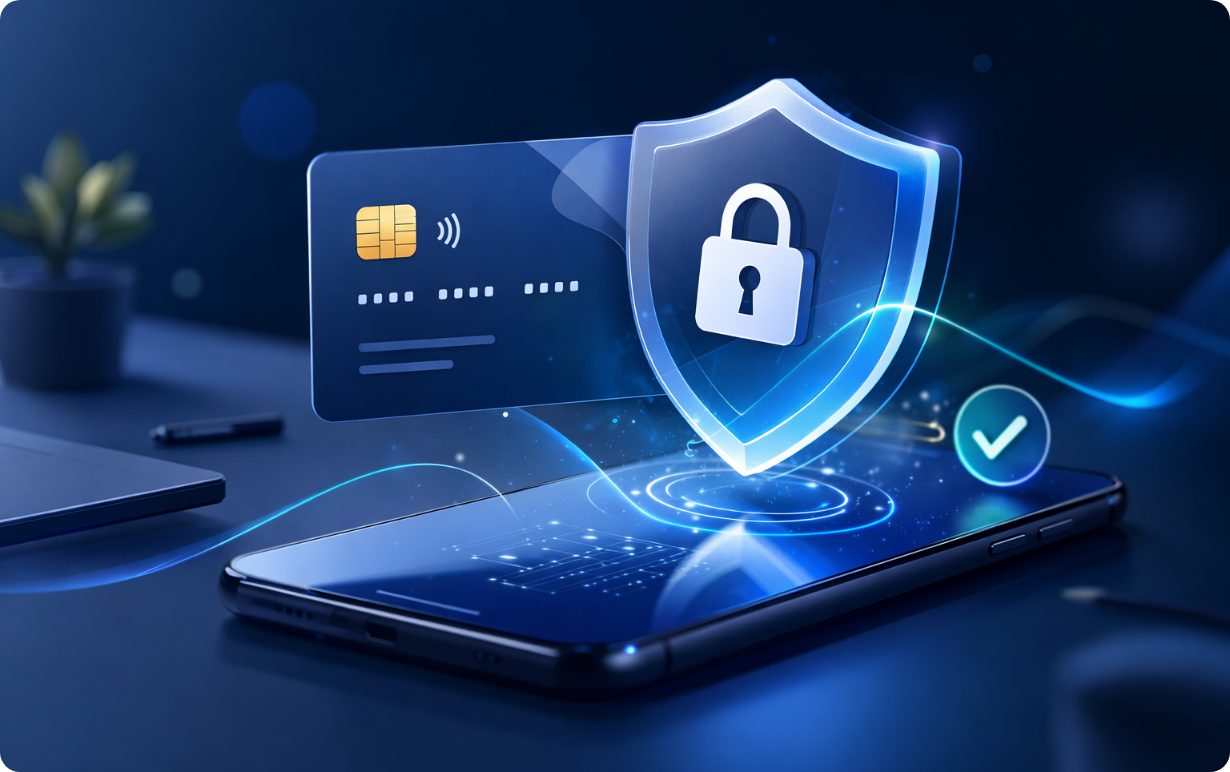
Payment security refers to the systems, controls, technologies, and behaviours that protect sensitive financial information throughout the payment lifecycle—from the moment a user initiates a transaction to final settlement and reconciliation.
What Needs Protection?
-

Card numbers, CVV, expiry dates
-
UPI IDs and UPI PINs
-
OTPs and authentication tokens
-
Bank account details
-
Personal identifiers linked to payments
In India, payment security operates at the intersection of:
-
Regulatory framework of the RBI
-
Regulations of NPCI (UPI, IMPS)
-
Global standards such as PCI-DSS 4.0
-
Local consumer-protection regulations
The goal is simple but critical:
Prevent fraud and data breaches without breaking user experience.
Without robust payment security, India risks:
-
Massive consumer distrust
-
Merchant losses via chargebacks and penalties
-
Slower adoption of digital payments
-
Systemic financial instability
India’s Payment Security Is More Important Than Ever
There is no longer anything "rare" or "technical" about digital payment fraud. The problem is behavioral, psychological, and highly organized.
The Reality in 2026
-
Each year, fraud losses exceed one lakh crores
-
70% of successful frauds involve credential sharing without users’ knowledge
-
When a scam occurs, 68% of users are hesitant to transact again
-
In addition to rising chargebacks and settlement delays, merchants are under more scrutiny for compliance issues.
Throughout the RBI’s communications, it emphasizes:
-
Shared responsibility is essential to security.
-
Defences must be built by platforms.
-
It is crucial that merchants implement controls.
-
Vigilance is essential for users.
The Modern Fraud Landscape in India
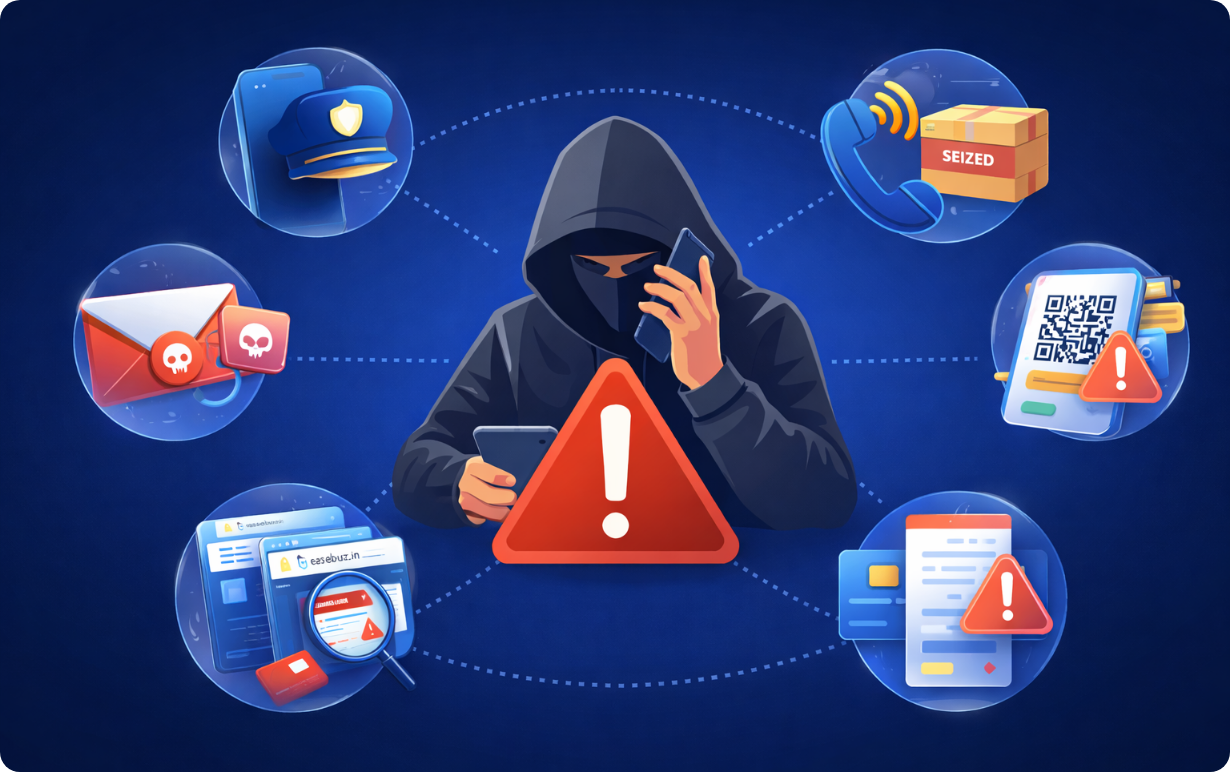
Fraudsters today don't "hack systems." They hack humans. Below is a comprehensive view of the most common and dangerous frauds seen across India.
-
Digital Arrest Scams
-
Fake Police & Government Video Calls
-
Fake Drug Control / Courier / Customs Calls
-
Phishing Messages & Fake Links
-
Look-Alike Domains & Fake Websites
-
Payment Page Redirection Fraud
-
OTP, CVV & UPI PIN Scams
-
“Testing”, “Fogging”, or “Resend” Payment Scams
-
Screen Sharing & Remote Access Attacks
-
Deepfake & Impersonation Fraud (Emerging)
A victim receives a telephone or video call claiming to be from the police, CBI, ED, or a cybercrime unit. If they do not immediately transfer money, they face "digital arrest" for crimes such as money laundering or illegal transactions.
Reality: There is no legal concept of digital arrest. Law enforcement never demands payments over calls or video.
Fraudsters appear in uniform, pose as fake officers, and use forged documents during video calls, creating fear and exerting pressure in the name of authority.
Remember: No government official asks for OTPs, PINs, or payments over WhatsApp, Zoom, or Skype.
Victims are told illegal parcels were seized in their name and asked to "settle" the case instantly.
Tips: Real agencies follow written legal procedures - not phone settlements
Credential-stealing sites are often accessed via SMS, email, or WhatsApp messages that impersonate banks, payment gateways, or government portals.
Fraudsters create domains that visually mimic real ones:
example.in -> examp1e.in.
These sites steal credentials and payment details during checkout.
Users are redirected mid-checkout to fake payment pages or shown fake errors asking them to "retry" or scan a QR code.
Fraudsters pose as support staff and ask users to "verify" details. Absolute rule: OTP, CVV, PINs are never shared. Not even once.
Victims are asked to resend money for confirmation or testing purposes.
Fact: No legitimate payment system requires manual test transactions.
Fraudsters trick users into installing screen-sharing apps like AnyDesk or TeamViewer to gain control of their devices.
AI-generated voices, Emails, and videos impersonate company founders, CEOs, or senior officials requesting urgent payments.
Core Payment Security Principles
World-class payment security is built on layers, not single controls.
-
Encrypt Everything
-
TLS 1.3+ (HTTPS) for data in transit
-
Tokenisation for stored card data
-
RBI-mandated tokenisation for recurring payments
-
Strong Authentication
-
Using 3DS 2.2, you can verify your biometrics frictionlessly
-
Binding and behavior of devices
-
Flows with only OTP (SIM swap risk) should be avoided
-
Real-Time Monitoring & Detection
-
Velocity spikes (many transactions quickly)
-
Location mismatches
-
Device anomalies
-
Unusual payment patterns
-
Full Compliance
-
PCI-DSS 4.0 (12 control domains)
-
RBI and NPCI mandates
-
Regular audits, logging, and reporting
Tokens ensure that even if data leaks, it is financially useless.
A strong authentication process can improve approval rates by as much as 70%.
AI systems monitor:
Modern systems block fraud before authorisation, not after damage.
Compliance is not paperwork, it is operational resilience.
Best Practices for Customers
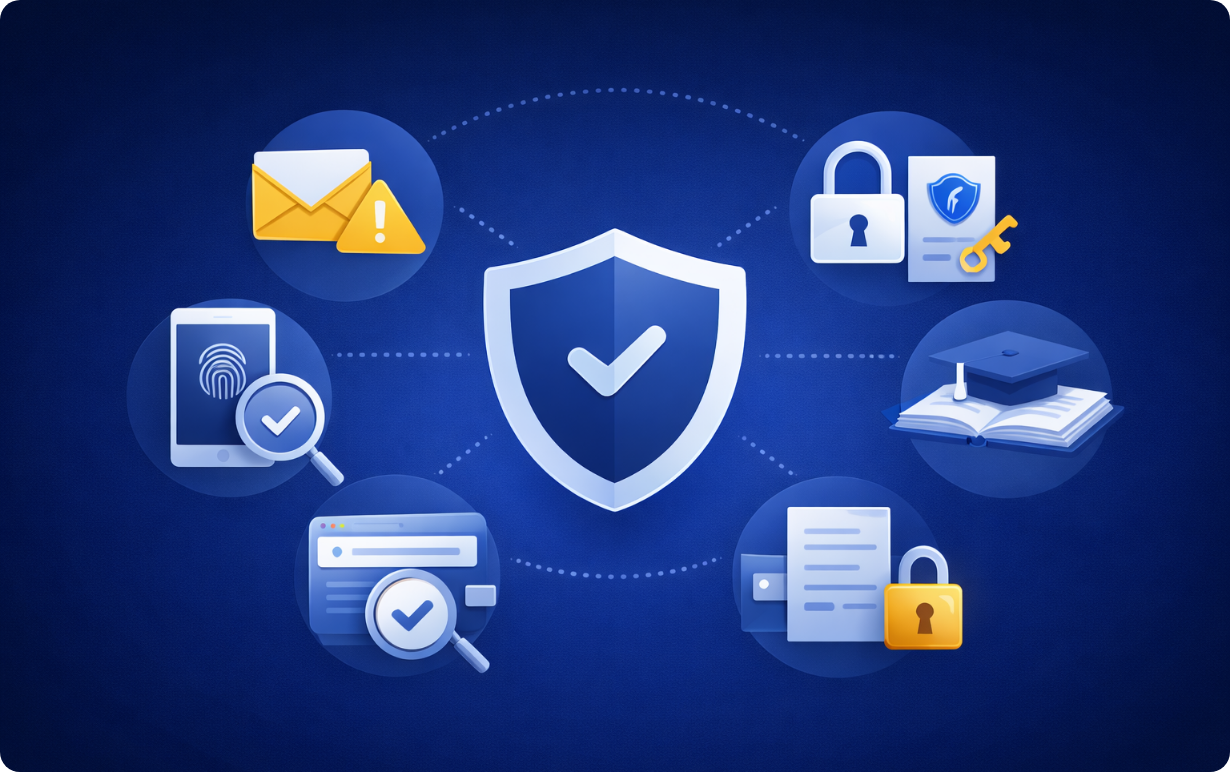
Most frauds fail if users follow simple habits:
-
Do not share OTPs, CVVs, PINs, or passwords with anyone
-
Stay away from threats and urgency
-
Save official apps and websites to your bookmarks
-
Make sure the domains are valid
-
Ensure transaction alerts and biometrics are enabled
-
Regularly check the statements
-
Educate students and elders
Always -> Pause. Verify. Act.
Best Practices for Merchants
Merchants prevent the majority of fraud when security is properly embedded.
Merchant Checklist
-
PCI-DSS compliance
-
Tokenised card storage
-
3DS authentication
-
Checkout fraud awareness banners
-
AI-based risk monitoring
-
Staff training and annual penetration testing
Why It Matters
-
Lower chargebacks
-
Higher trust and conversions
-
Faster settlements
-
Regulatory safety
What To Do If Fraud Happens (Critical Response Guide)
Act Within the First Hour
- Block card / UPI via bank app
- Call 1930 (India’s Cyber Crime Helpline)
- File a report at cybercrime.gov.in
- Inform the bank/payment provider
- Initiate a chargeback if applicable
Early reporting dramatically increases recovery chances.
Government & Regulatory Support (India)
-
Helpline for Cybercrime: 1930 (24x7)
-
Cybercrime Portal: https://cybercrime.gov.in/
-
A timeline for dispute resolution set by the RBI
-
Redress mechanisms for grievances at the bank level
Conclusion
A new fraudster emerges every day, but informed users and secure systems keep pace. There is no need to fear a secure payment system. Sharing design-driven, and knowledge-based are its characteristics. Platforms working with RBI-authorised payment partners that embed tokenisation, strong authentication, and real-time monitoring are significantly better positioned to prevent fraud at scale.
By combining:
-
Strong technology
-
Regulatory compliance
-
Merchant responsibility
-
User awareness
FAQ’s
What should I do immediately if I suspect digital payment fraud?
Act immediately to limit damage. Block your card, UPI ID, or bank account right away using your bank’s app or customer care. Then dial the Cyber Crime Helpline at 1930 and file a complaint on cybercrime.gov.in - quick response greatly increases the chances of recovery.
Can banks, police, or payment companies ever ask for OTP, CVV, or UPI PIN?
No. Never. Legitimate banks, payment gateways, police, or government agencies will never ask for your OTP, CVV, PIN, or passwords on calls, messages, or video calls. Any such request is an attempt at fraud.
What is a “digital arrest,” and is it legally valid?
’Digital arrest’ is a scam tactic that aims to scare people into sending money or sharing personal details. There is no such legal process in India. Police or other law enforcement agencies do not make arrests, conduct investigations, or demand payments over phone calls or video calls.
How can I identify a fake payment website or checkout page?
Check the website address carefully for spelling mistakes, strange characters, or extra words. Make sure the URL starts with 'https://' and shows a padlock icon. Avoid sites that redirect you unexpectedly, and always make payments only through official apps or trusted links.
I sent money to the wrong UPI ID or bank account. What should I do?
Act immediately. Contact your bank or the UPI app’s customer support and request a reversal. If the issue is not resolved quickly, report it at 1930. The sooner you report, the higher the chance of recovering the money.
What are “testing”, “resend”, or “verification” payment scams?
These scams involve asking users to resend money or make a 'test' transaction due to fake errors. Legitimate payment systems never require manual testing or resending transactions. Refuse and report such requests.
Are video calls from police, customs, or drug control officials genuine?
No government authority in India conducts financial verification, fines, or arrests over video calls. Such calls, especially those that demand secrecy or urgency, are scams and should be disconnected immediately.
How can merchants reduce payment fraud on their platforms?
Display clear fraud-prevention messages on checkout pages when using PCI-DSS-compliant payment gateways that support strong authentication, such as 3D Secure.
What is the safest way to make digital payments?
Stay up to date with your devices, use official apps, enable biometric authentication where available, and monitor transaction alerts. The current fraud rate for UPI with biometric verification is one of the lowest in the industry.
Can money lost to digital fraud be recovered?
Recovery depends on how quickly the fraud is reported. Many cases are resolved when reported within hours through banks and the cybercrime helpline. Delays reduce recovery chances, but reporting is always recommended.
Share: