CATEGORY - PAYMENTS
Payment Gateway for D2C Businesses
Payments - 18 June, 2025
-
Table of Contents
What is Payment Gateway and How it Works?
A payment gateway is a technology that securely collects, encrypts, and transmits a customer’s payment information—whether from an online checkout, mobile app, or in-store terminal—to the merchant’s acquiring bank for authorisation and settlement.
Role in Online Transactions:
When a customer pays online, the payment gateway functions as a secure technology interface—verifying payment details, encrypting data, forwarding it to the bank, and confirming the transaction status in real time.
Importance for eCommerce & D2C:
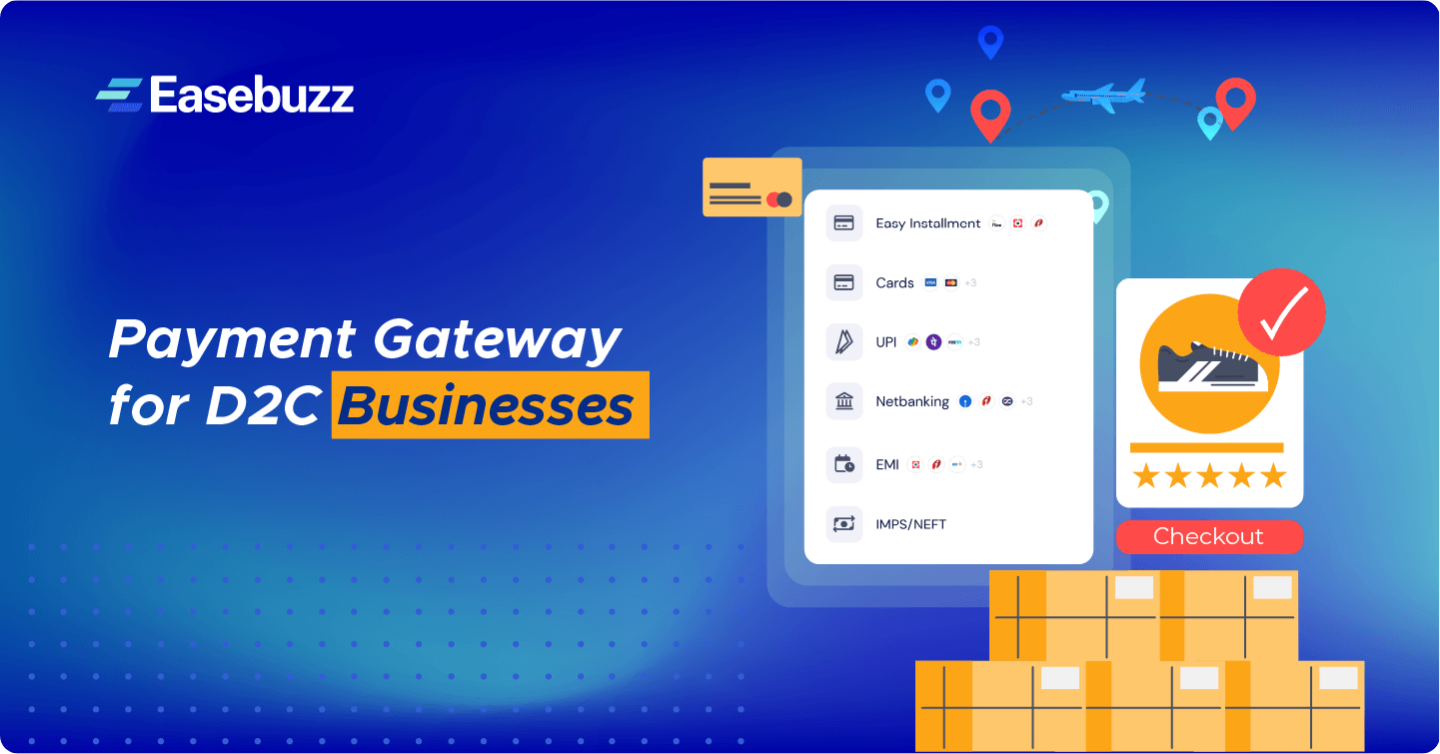
For online merchants, a trusted ecommerce payment gateway builds shopper confidence, reduces cart abandonment, and supports varied payment options (Net Banking, cards, UPI, wallets, payment links, QR payments), directly boosting conversions.
How It Works (Step by Step):
-
The customer initiates payment at checkout and enters details.
-
Encryption kicks in—data is protected using SSL/TLS protocols.
-
The transaction is routed to the acquiring bank, then to card networks and the issuing bank.
-
Authorization occurs—issuing bank checks and funds and sending approval or decline.
-
Gateway relays responses to merchants and shoppers in real-time.
-
Settlement—approved funds move from the issuing bank to the merchant’s account over instantly or up to 3 days.
How can the right payment gateway impact your D2C business?
Choosing the right payment gateway isn’t just about processing payments—it’s about enhancing the entire customer journey and driving better business outcomes for your D2C brand. Here’s how key features can make a measurable difference:
| Feature | Business Impact |
|---|---|
|
Smart Routing |
Automatically directs transactions through the most reliable channel, increasing success rates and reducing failed payments. |
|
Tokenized Checkout |
Stores card information securely for returning customers, enabling faster repeat purchases and improved user experience. |
|
Offer Engine Integration |
Lets you run dynamic discounts, cashback offers, and coupon-based promotions, encouraging higher conversions and larger basket sizes. |
|
One-Click Checkout |
Speeds up the checkout process, significantly lowering cart abandonment—especially on mobile. |
|
Dashboard Analytics |
Provides real-time data on sales, customer behavior, and campaign performance to optimize marketing spend and improve ROI. |
|
Multi-Payment Support |
Accepts cards, UPI, wallets, BNPL, and EMIs—giving customers the flexibility they expect. |
|
Fraud Detection Tools |
Reduces chargebacks and builds customer trust by flagging suspicious activity early. |
By integrating a payment gateway that aligns with your business goals, D2C brands can offer seamless experiences, increase conversions, and gain actionable insights—all while maintaining security and scalability.
What is the Future of Payment Gateway?
-
AI & Machine Learning Integration
Payment gateways are leveraging AI/ML for:
-

Smart transaction routing.
-
Real-time fraud detection.
-
Higher payment success rates and fewer false declines.
-
-
UPI Surpassing Traditional Card Networks
-
UPI is now dominating digital payments in India, overtaking Visa and Mastercard in transaction volumes.
-
UPI Autopay is enabling seamless subscription-based billing and recurring payments.
-
-
Rise of Subscription Economy
-
Payment gateways now support recurring models like UPI Autopay and VRP (Variable Recurring Payments).
-
Ideal for D2C and SaaS brands to ensure consistent revenue flow.
-
-
Voice-Enabled & Offline Payment Solutions
-
UPI’s Conversational Voice Payments and soundbox devices allow voice and offline transactions.
-
It is beneficial in low-connectivity or screenless environments.
-
-
Personalised Checkout Experiences
-
Use of tokenisation, saved cards, and one-click checkout.
-
It helps reduce cart abandonment and improve conversion rates.
-
-
Advanced Security & Compliance
-
Gateways implement tokenisation and PCI DSS compliance.
-
Protects card-on-file data and builds customer trust.
-
-
Agentic Payments (Coming Soon)
-
AI agents will soon be capable of initiating and completing transactions.
-
Will redefine how consumers and businesses interact with payment platforms.
-
-
What D2C Brands Should Do
-
Adopt future-ready gateways with AI, UPI, voice, and subscription support.
-
Prioritise seamless integration and omnichannel payment experiences.
-
Conclusion
In today’s digital economy, a payment gateway is more than just a transaction processor—it’s a critical enabler of secure, seamless, and scalable commerce. From verifying online payments to supporting intelligent routing, UPI, and subscription models, the best payment gateway plays a crucial role in improving customer experience and driving D2C business growth.
With innovations like AI-driven fraud detection, personalized checkout, and voice-enabled payments reshaping the future, choosing the right gateway can directly impact conversions, loyalty, and revenue. As the landscape evolves, D2C brands must adopt future-ready gateways that blend security, speed, and flexibility to stay competitive and customer-centric.
FAQ's
Why is a payment gateway important for D2C brands?
A payment gateway enables secure, smooth, and multi-mode online transactions—essential for building trust, reducing cart abandonment, and ensuring high success rates, which directly impact your sales and customer experience.
Can a payment gateway integrate with my existing D2C stack?
Yes, most modern gateways offer easy APIs and plugins that integrate seamlessly with eCommerce platforms, CRMs, and ERP systems, allowing D2C brands to streamline payments within their current tech stack.
How do payment gateways help improve conversion rates?
Gateways reduce friction at checkout with features like one-click payments, saved cards, UPI, and intelligent routing. These tools speed up the process and minimize failed transactions, encouraging more customers to complete their purchases.
Share:


Related Posts
What is a Payment? Types, Benefits & Limitations
Payments - 11 June, 2025
QR Code Payments: How They Work and Why Everyone’s Using Them
Payments - 3 June, 2025