CATEGORY - FEATURES & UPDATES
What Is ERP For Schools And How Is It Beneficial For School Management?
Features & updates - 14 Jan, 2025
-
Table of Contents
Educational institutions, and especially schools, are complex organizations for which all processes need to be managed well. Schools have many duties, from student enrollments and bill-paying, to stock control and personnel management, among others.
School administration is a very demanding task with a lot of things, such as student enrolment, fees structure mapping, library studies, courses enrolled, and a bunch of other activities. All of this is contained in an Enterprise Resource Planning (ERP) system. ERP clusters data and solves simple tasks, which can be applied to school management, efficiency and workflow.
In this blog we will explore what ERP systems take the schools, address the most prominent aspects and assets of ERP systems as well as reveal how such systems can achieve a new paradigm of school management to create something better.
What is ERP for Schools?
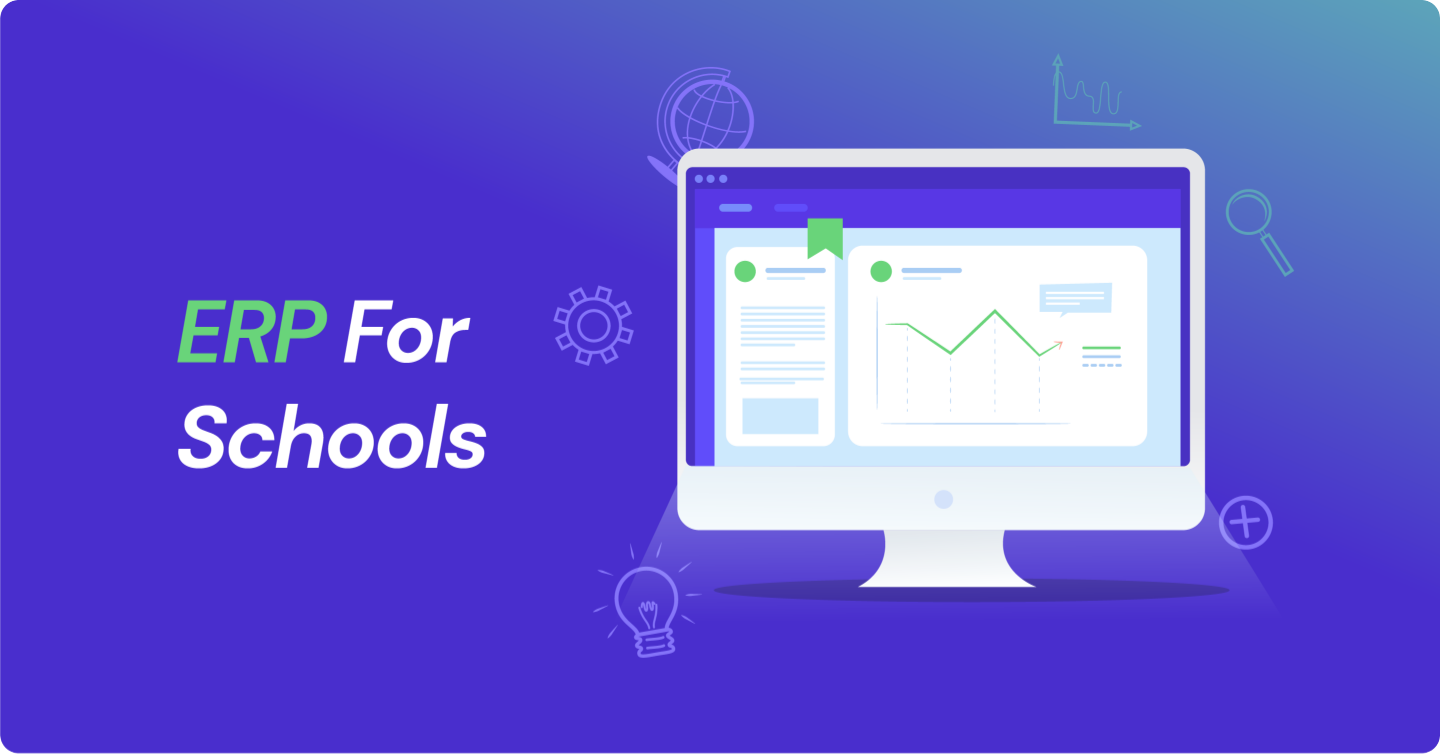
An ERP (Enterprise Resource Planning) system for schools. This tool is developed in order to streamline and to structure the activity of a school integrating across all its main processes under one window - such as student management, attendance, grades, timetables, fee collection, HR activities and communication.
Here is how a school ERP helps educational institutions:
-

Increases Efficacy: Functions as a daily task driven system, produces less paperwork and saves time.
-
Excellent with Information-Driven: Offers real-time data and report data for making decisions about the data.
-
Enhanced Parent Communication: Real-time reporting and parental/parent access available.
-
Higher Transparency: Allows for easy accountability of fees, attendance, and academic performance.
-
Security: Strict protection for sensitive student and staff data.
By implementing an ERP, schools can be managed more effectively, make smarter and better-informed decisions, and create a suitable learning environment for children.
What is The Role Played By an ERP in Schools?
An ERP (Enterprise Resource Planning) is a computer application that can integrate all school operations, more efficiently and structured. It centralizes and controls information, streamlines data collection and improves resource management.
Most Important Functions of a School ERP:
-
Centralized Data Hub: A school ERP is a system that puts all the student and staff data together in one site. This guarantees consistency, on-line access, and reliable documentation, reducing data errors.
-
Effortless Process Management: Automating routine tasks such as fee entry, attendance recording and report generation, a school ERP maximizes the user’s time by eliminating errors made by humans.
-
Smarter Decision-Making: Through in-the-moment analytics and insights, schools can take a more informed decision with regards to resource allocation, funding and high-level strategic planning.
-
Stronger Parent Engagement: Features such as electronic bill payment, progress reporting, and real-time alerts facilitate communication with parents, whom we satisfy and keep informed about their child’s way of learning.
Which way does ERP benefit school management?
-
Better Data Management: Common data repository with easy access for decision making.
-
Higher Efficiency: by automating manual operation and so time and costs are saved.
-
Better communication: Enhanced opportunities for students, parents, and teachers to communicate.
-
Better Resource Allocation: data-driven resource allocation with better utilization.
-
Improved Data Security & Privacy: Will ensure high privacy for confidential information.
-
Increased Student and Parent Participation: Students and parents can be put in an empowered position through real-time data and feedback.
-
Real-Time Information and Decision Making: Information available to us for big-picture planning.
-
Streamlined School Management: Efficient management of a variety of school operations.
-
Cost-Effective Solution: Cost-savings through automation and efficiency in the long-term.
Tips for Selecting the Best ERP for Your School & University
Choosing an appropriate ERP software has the potential to greatly improve operational efficiency and decision-making at your educational institution. Key factors, that need to be taken into account are:
-
Essential Features:
- Attendance Management: Automize attendance tracking; create reports; and pinpoint at-risk students.
- Grade Management: Automates grade/assessment processes and creates detailed academic reports.
- Exam Management: Automate exam scheduling and result declaration, and generate grade cards.
- Time Table Scheduling: Quickly schedule classes, exams, and other activities and deliver timely notifications.
-
Staff Management:
- Correct Documentation: Keep complete staff documentation such as qualifications, experience, and performance history.
- Performance monitoring: Have performance targets, perform critiques, and else find spots to enhance.
- Leave Management: Efficiency in register, approvals, scheduling process.
-
Customization and Scalability:
- Customizable Solutions: Choose specific software that fits the needs of your institution as well.
- Scalability: Ensure the software is prepared to meet future increases in size and evolving requirements.
- Integration Capability: Simple integration into accounting, HR and LMS systems.
-
Reporting and Analytics:
- Data-driven insights: Provide detailed reports on student achievement, attendance, and finances.
- Informed Decision-Making: Leverage data-driven intelligence to improve performance and operations.
-
Data Security:
- Strong Security: Emphasize data security with additional functionality such as role-based access control, encryption, and backups.
-
Mobile Accessibility:
- Off-the-Go Access: Permit staff and administrators use mobile devices to access critical information and to perform activities on any mobile device.
-
Training and Support:
- Full-scale Training: Ensure sufficient training to train staff how to use the ERP system.
- Concise: Choose a vendor who is responsive and capable of delivering technical support.
Having considered all of these factors you are at a stage to decide on an ERP which will allow your institution to meet the demands of the future and provide an excellent learning environment.
Introducing Feebuzz: The complete fee management solution for fee collection
Fee collection may be a labor-intensive, complex process for educational institutions. Feesbuzz provides a complete fee management system that can streamline this workflow and increase efficiency.
What is Feesbuzz?
Feesbuzz is new generation software able to automa-tize and streamline fee collection for any-size educational institution. It uses cutting-edge technology to enable institutions to have fee collection management effortlessly.
Key Features of Feesbuzz:
-
Fee Collection Batch-wise & Course-wise:
- Effective fee control for various batches and courses.
- The append to customization of the fee structures and payment plans.
-
Discount Management:
- Simple to apply and monitor discounts for a roll-up of student categories.
- Establish specific discount criteria and eligibility conditions.
-
Report Generation:
- Create the comprehensive reports needed to study fee collection patterns and financial health.
- Report customisation to cater to special needs.
-
Automated Reminders:
- timely notifications to parents via SMS and email.
- Reduce delinquency and improve collections rates.
-
Online Payment Integration:
- Safely receive online payments through different OSN payment gateways.
- Give easy means of payment for parents.
-
Fee Structure Management:
- You can build and manage complex fee models readily.
- Define fee structure, due dates, and payment terms.
-
Fee Challan Generation:
- Creating fees challans with correct information.
- Monitor the status and payment associated with challan.
-
Real-time Fee Tracking:
- Real-time fee collection of the monitor.
- Recognize and address the possible problems in a timely manner.
Advantages of Feesbuzz:
-
Minimize Time and Effort: Introduce to replace manual labour, and reduce paper based work.
-
Enhance Efficiency: Improve processes for bill collection and operational efficiency.
-
Enhance Parent Communication: Send up-to-date prompting and notifications to parents.
-
Trusted Payment platform: Allow safe and encrypted payment transactions.
-
Data-Driven Insights: Information-driven decision-making through detailed data reports.
-
Reduce Delinquency: Set up system alerts and reminders.
-
Enhanced Transparency: Provide easy access to the fee and payment status.
Thanks to Feesbuzz, it is now possible for educational establishments to significantly improve their fee collection, reduce administrative burden and achieve a better overall efficiency.
Conclusion
Implementation of an ERP system changes school administration in its efficiency, communication, and data-oriented solutions. Solutions such as Feesbuzz - streamline fee administration, ease workloads of administrative staff and enhance parent engagement leading to an effective and sustainable educational ecosystem.
FAQ’s: ERP in Education
What does ERP stand for in education?
School ERP (school-enterprise resource planning software) stands for. This type of software allows an institution to monitor and report on data and to record daily events occurring at the institution.
What is ERP portal for students?
An ERP portal for students is an Internet portal through which students can access education-related information and services, including online fee payment, attendance monitoring, online test results and communication with teachers.
What are the Features of ERP for schools?
ERP systems for schools offer a wide range of features, including:
-
Student Information System (SIS)
-
Fee Management
-
Human Resource Management (HRM)
-
Inventory Management
-
Library Management
-
Hostel Management
-
Transportation Management
-
Exam and Result Management
-
Parent-Teacher Communication
What is the ERP system in schools?
An ERP system in schools represents an all-in-one type of software that links all school operational processes. It assists schools with automating tasks, enhancing efficiency, and with making well-considered decisions.
Share: